


2 products


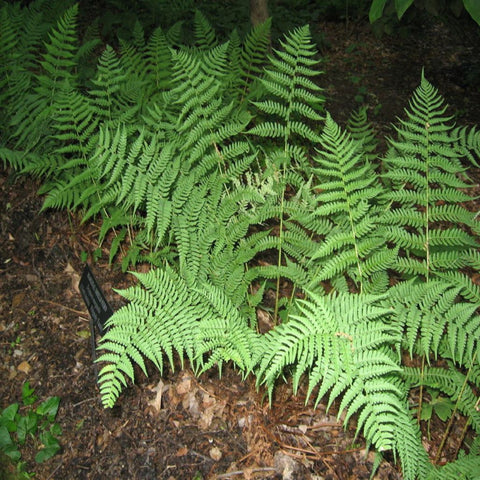
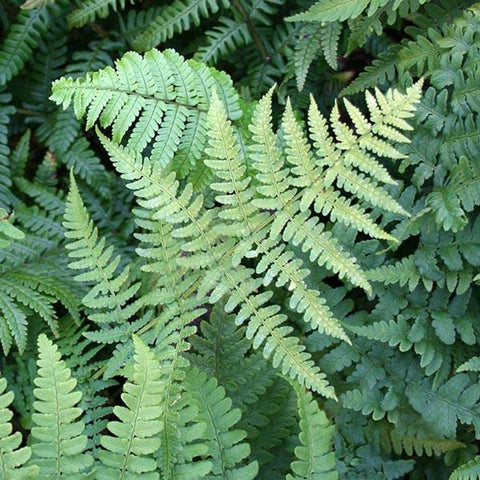
Evergreen Ferns
Evergreen ferns keep their fronds through winter, adding color to the garden when most perennials have disappeared. They work well along foundations, on shady slopes, and in woodland borders, where they give you structure and green foliage in every season.
Our ferns ship as bare root plants and rhizomes, not potted plants. Expect dormant roots or crowns when your order arrives, with little or no foliage. Fronds appear once the soil warms.
Best Evergreen Ferns
- Christmas fern (Polystichum acrostichoides): The classic evergreen fern. Dark, glossy fronds stay green all winter and look especially good against snow.
- Autumn fern (Dryopteris erythrosora): Coppery new fronds that mature to deep green. Evergreen in mild climates, semi-evergreen in colder ones.
- Marginal wood fern (Dryopteris marginalis): Leathery, blue-green fronds that hold through winter. Tolerates dry shade.
- Tassel fern (Polystichum polyblepharum): Glossy, dark green fronds with a tidy, shuttlecock shape.
- Holly fern (Cyrtomium falcatum): Leathery, holly-like leaflets. Best in warmer zones.
- Southern shield fern (Thelypteris kunthii): Lush, fast-growing, and heat tolerant for warm, humid regions.
- Southern wood fern (Dryopteris ludoviciana): A tall, dependable fern for moist soil in warmer zones.
Evergreen vs. Semi-Evergreen Ferns
True evergreen ferns keep most of their fronds all winter. Semi-evergreen ferns keep some, especially in mild winters, and drop them in harsh cold. In colder zones, evergreen ferns may look weathered by late winter. Trim off tattered fronds in early spring just before new growth emerges, and fresh fronds will replace them.
How to Plant Bare Root Evergreen Ferns
- Plant in spring after the last hard frost, or in early fall at least 4 to 6 weeks before the ground freezes.
- Choose part to full shade with rich, well-drained soil.
- Set the crown at or just below the soil surface and spread the roots out.
- Water well and keep the soil evenly moist through the first season.
- Mulch 2 to 3 inches deep to protect roots and hold moisture.
- In exposed spots, shelter plants from harsh winter wind to keep fronds from burning.
Why Grow Evergreen Ferns?
- Year-round color: Green fronds in winter when the rest of the garden is bare.
- Low maintenance: Once established, they need little beyond mulch and occasional water.
- Deer and rabbit resistant: Most evergreen ferns are rarely bothered by wildlife.
- Great for tough spots: Many tolerate dry shade, slopes, and foundation plantings.
- Long-lived: They form fuller clumps over time.
Evergreen Ferns FAQ
What is the best evergreen fern?
Christmas fern is the most widely grown. It’s reliable, hardy, and easy to care for.
Are evergreen ferns hardy in cold climates?
Some are. Christmas fern and marginal wood fern handle cold zones well, though fronds may flatten under snow or weather by spring. Holly fern and southern shield fern suit warmer zones.
Do evergreen ferns lose their leaves?
Older fronds eventually brown and are replaced by new growth in spring. Trim damaged fronds before new growth begins.
Do evergreen ferns need shade?
Most prefer part to full shade. Morning sun with afternoon shade works for many varieties.
What do bare root ferns look like when they arrive?
Dormant rhizomes or crowns with roots, usually without foliage. This is normal, and fronds emerge after planting and warm weather.